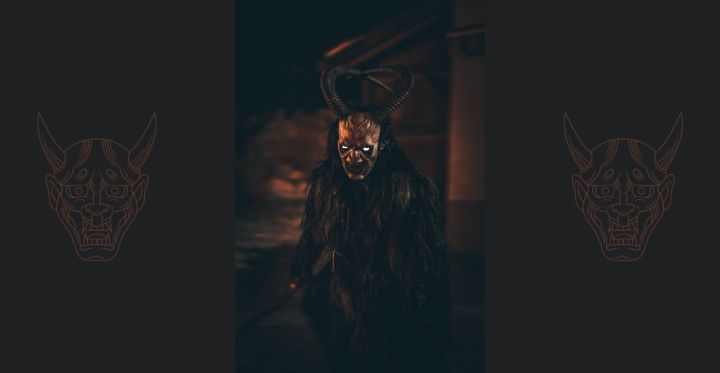
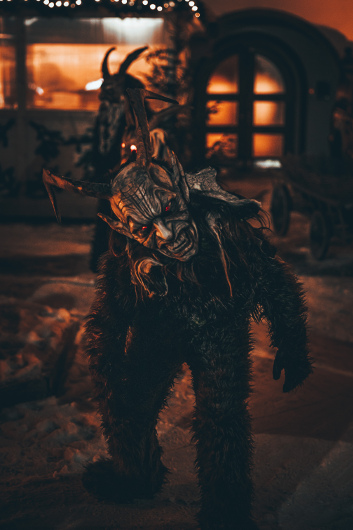
It may be difficult for some to believe that the holidays have a dark side, but they do and Krampus is legendary proof. Tales of the demonic figure have existed for centuries, and his origins are shrouded in mystery. However, scholars have managed to uncover a few essential facts over time and truth be told, he’s more popular now than ever. Brace yourself because I’m about to divulge a few ghastly details about this demon of Christmas.
He Has Pagan Roots
While it’s not entirely certain where Krampus’s origin story begins, most scholars speculate that he’s rooted in ancient pagan traditions that celebrated the winter solstice. Many also believe that he’s the offspring of Hel, a Norse deity who oversees the underworld. This may explain why there are tales that warn he drags bad children to hell, but more on that later. It appears safe to say myths about Krampus sprang up in the European Alpine regions known today as Austria and Germany. Interestingly, research has revealed that the dark figure also surfaced during the Enlightenment period in Vienna as a means to educate children about behavior and discipline.
Krampus Is Notorious for His Terrifying Appearance
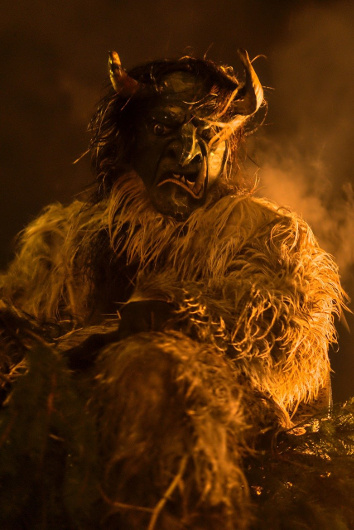
There’s no denying Krampus would be a formidable figure to encounter in the flesh. He’s a hybrid creature of sorts, typically described as having demonic, human and animalistic (specifically goat-like) characteristics. His head bears horns and he has hooves for feet. Some images depict him with one human foot and one cloven hoof. His body is covered in hair and he has a blood red tongue that hangs menacingly out of his mouth. Quite a beastly sight if you ask me, and one that carries a striking resemblance to the Christian devil.
Krampus as an Anti-Christ Figure
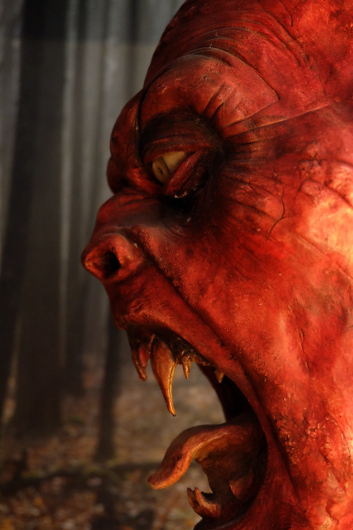
Speaking of the devil, it’s purported that when Christianity spread and sought to do away with pagan practices, Krampus, instead of disappearing, unintentionally became bound to Christmas. It’s a possible reason why he is weighed down with chains and perceived as a demon-like being who’s submissive to good ol’ Saint Nick. For a brief period during the 1930s, he was banned in Austria, which was under Fascist rule at the time. The government perceived the beast as evil, sinful and anti-Catholic. However, the ban was short lived and unsuccessful at destroying the Krampus myth.
His Name Is Connected to His Look
So, why do we call him “Krampus?” Well, this is another bit about him where information is murky, but there is one agreed upon interpretation. Many sources say since the figure originated in Germany that his name stems from the German term “krampen,” which translates to “claw.” We just discussed how he has hooves instead of feet, so it makes sense he’d be identified with this unusual feature.
Krampus Disciplines Misbehaving Kids
Besides his form, if there’s anything else Krampus is infamous for, it’s the punishments he doles out to naughty children. He chastises juvenile troublemakers by whipping them into shape… literally. He’s armed with bundles of sticks to swat bad kids. He also carries around a sizable bag, like Santa, except his is not filled with presents. Instead, he kidnaps and stuffs mischievous children into his sack and drags them to hell. Talk about retribution for the wicked.
Celebrating or Dreading Krampusnacht?
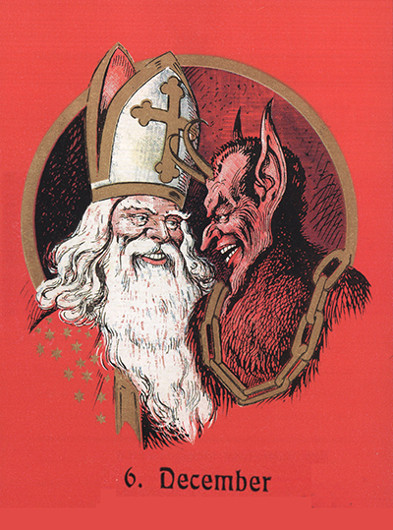
If you’re wondering when this Christmas demon makes his grand appearance, it’s on Krampusnacht, aka Krampus night. In my research, sources say the occasion takes place between December 5th and 6th. He’s accompanied by Saint Nicholas and together they visit households in the dead of night to carry out their work. While St. Nick leaves gifts for good children, Krampus punishes those who made the naughty list. Contrary to what some may believe, he and Santa have a well-established partnership and need each other to create that holiday dark magic.
“Krampus Runs” Are a Thing
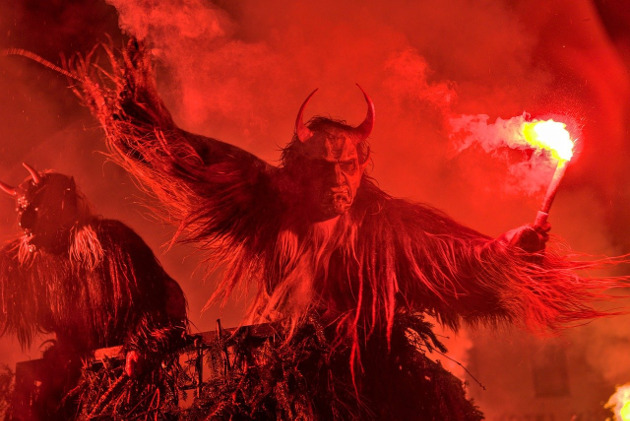
In efforts to keep the notorious legend alive and celebrate Krampus, an event called Krampuslauf (Krampus run) emerged during the late 20th century in Austria and Germany. Revelers gather in the streets and men dress up as the holiday devil to chase and scare the crowds, especially children. This festivity is still held today in European Alpine regions and has even become popular in other parts of the world. Celebrations include parades, carousing and plenty of drunken partygoers donning a Krampus costume. From what I’ve read, it’s a wild time.
He Has His Own Greeting Cards
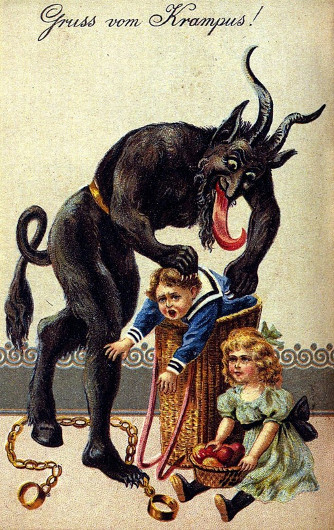
In the late 19th century, Krampus began to appear on holiday postcards in Austria and Germany, known as Krampuskarten. However, these cards didn’t communicate warm wishes. Rather, they depicted Krampus in action doing what he does best—terrorizing children. There were also some more risqué ones that showed the Xmas monster lasciviously chasing women. These were likely given in jest. Krampus greeting cards were introduced in the U.S. when illustrator Monte Beauchamp created and released a book in 2004 titled Devil in Design, containing a variety of Krampus-inspired cards, and the subsequent Krampus: The Devil of Christmas in 2010.
There’s a Krampus Museum
Yes, you read that right. Located in Kitzbühel, Austria, is a museum dedicated to the history of Krampus. It displays an extensive collection of masks and costumes and showcases dozens of exhibits all dedicated to the Christmas demon. I took a 3D virtual tour on their website and was amazed! There are rooms that resemble dungeons with chains and pitchforks, and the creatures that fill them are truly frightening in the best way possible. The establishment has many morbid artifacts and I definitely need to pay it a visit when I get the chance to travel to this region.
Pop Culture Loves Krampus
Krampus is alive and well today and has become popular across the globe. He’s certainly made his way to North America where he’s revered in the United States. Not only are there events and parties hosted in his honor across the U.S., but there’s also a dedicated Los Angeles Krampus organization, which is celebrating their 10-year anniversary this holiday season.
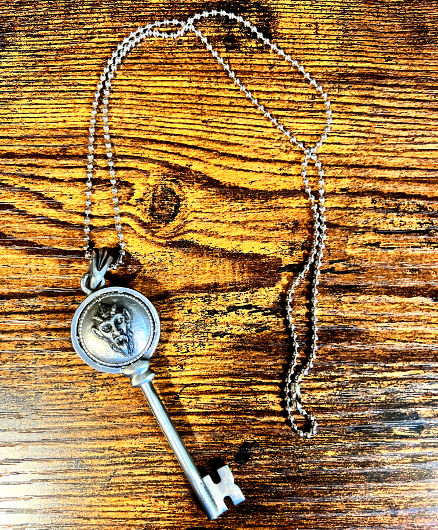
He’s also popped up in TV series, such as Grimm, Supernatural and American Dad. Most notable is the 2015 horror motion picture Krampus where the holiday demon appeared on the big screen. He’s also become fashionable. A few years ago, at the Oddities Flea Market in LA, I purchased a Krampus necklace. It’s in the shape of a key, bears his horned façade and shows him teasingly sticking his tongue out. Although his prevalence in pop culture raises the question whether Krampus is becoming too commercialized, I feel as long as we pay respect to his origins and the ancient traditions surrounding him, Krampus will remain a distinguished mythical figure.

 Vamp Jenn's Corner
Thank you that was really informative reading. In Europe there are so many alternatives to the now dominant Disney inspired Christmas fables about Santa Claus and his raindeers and elves. Krampus is one of them. In Sweden where I grew up there were “tomtar”, little gnomes with pointed hats who took care of the animals and brought gifts and ate porridge on Christmas, and so did the Christmas goat. Santa Claus pretty much replaced the gnomes but kept the name “tomte”. Still Swedes don’t think of Santa Claus (Tomten) as being only one Santa Claus as in the US, even though the Disney Santa has been imported. It makes more sense that a whole bunch of little gnomes, or many Santas, bring gifts than one Santa bringing gifts to all children in the world, at lightspeed I imagine. Disney’s Santa is breaking the laws of physics.
LikeLiked by 1 person
You’re welcome, and thank you for reading! I had fun doing research, especially because I find krampus fascinating. I had no idea about the Swedish Christmas tradition. That’s really interesting!
LikeLiked by 1 person
A fascinating and informative history of the Krampus myth.
I didn’t know that many consider Krampus an offspring of Hel the Norse goddess of the Underworld.
Back in the early 20-teens (2014 or thereabouts) I came across a newspaper article online about a demon-goat in the Cornwall region of England (he looked like Krampus except that he was white in colour).
So in a fictional blog post I wrote speculating about the origins of Krampus, I had this white Cornish demon goat making out with Hel the Norse goddess of the Underworld and she gave birth to Krampus.
Maybe there was something to my story.
LikeLiked by 1 person
Thank you! I’m glad you found this post interesting. I had no idea either that he was associated with Hel until I did research for this article. And how fascinating about your story. You were definitely on to something!
LikeLiked by 1 person
Thank you 😊.
LikeLiked by 1 person